


In today’s competitive apparel industry, understanding the Clothing Manufacturing Process: From Design to Delivery is essential for fashion brands, wholesalers, private label businesses, startups, and entrepreneurs looking to launch or scale their clothing lines. Whether you are sourcing custom sportswear, streetwear, activewear, workwear, or fashion apparel, having a clear understanding of the manufacturing journey helps ensure quality, consistency, and timely delivery.
For bulk buyers and B2B businesses across the USA, UK, Australia, Canada, and Europe, choosing the right manufacturing partner can significantly impact product quality, production costs, and brand reputation. This guide explains the complete clothing manufacturing process and highlights how experienced manufacturers transform ideas into market-ready apparel. The process typically includes design development, tech pack preparation, sourcing, sampling, production, quality control, packaging, and shipping.
Why Understanding the Clothing Manufacturing Process Matters
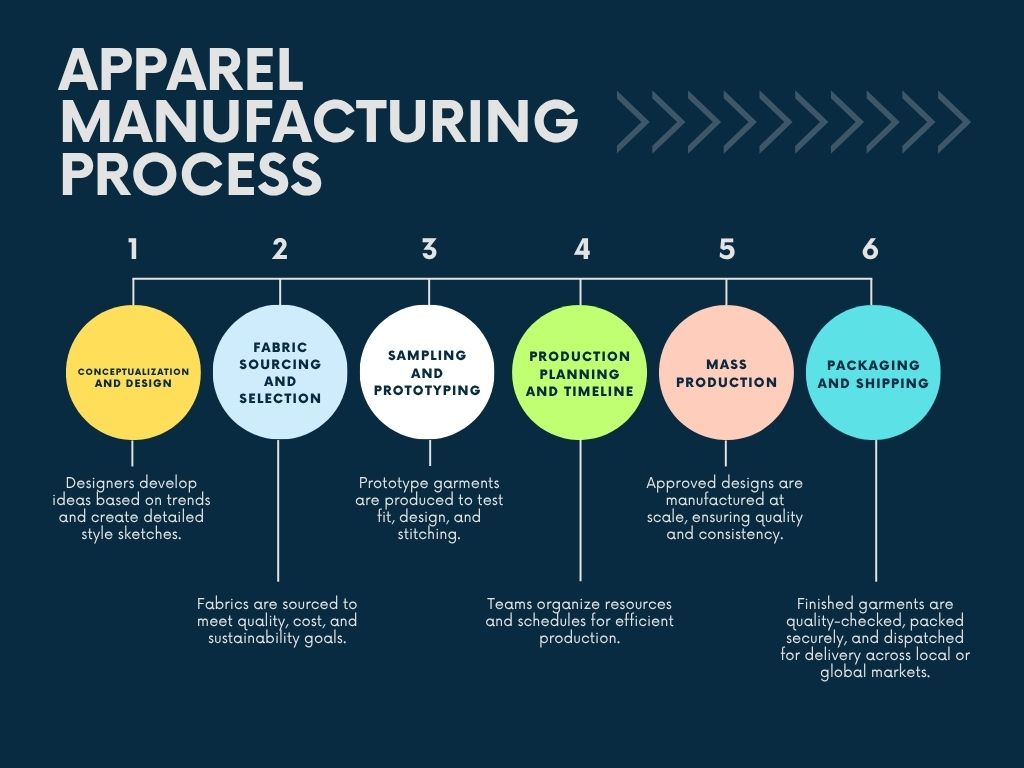
Many apparel brands focus on product design but overlook the complexities involved in manufacturing. Delays, quality issues, increased costs, and production errors often result from poor planning or insufficient knowledge of the manufacturing workflow.
A well-managed clothing production process allows businesses to:
- Maintain consistent product quality
- Reduce manufacturing risks
- Improve delivery timelines
- Control production costs
- Scale efficiently
- Build long-term supplier relationships
For private label brands and apparel startups, understanding each stage helps streamline communication with manufacturers and ensures expectations are met throughout production. Clear documentation and process control are widely cited as critical factors in successful apparel production.
Step 1: Design Development and Product Concept
The first stage of the clothing manufacturing process begins with a design concept. This is where brands define their product vision, target audience, style preferences, and functionality requirements.
During this phase, businesses typically create:
- Design sketches
- Mood boards
- Product references
- Fabric preferences
- Color palettes
- Branding concepts
Whether you’re developing premium streetwear, custom sportswear, or private label apparel, the goal is to create a product that aligns with your brand identity and market demand.
Professional manufacturers often assist clients in refining concepts to ensure designs are production-ready and commercially viable. Design development establishes the foundation for every stage that follows.
Step 2: Tech Pack Creation
A tech pack serves as the blueprint for garment production. It contains all the technical specifications required to manufacture a product accurately.
A comprehensive tech pack typically includes:
- Product measurements
- Fabric specifications
- Stitching details
- Label placement
- Print and embroidery requirements
- Color references
- Packaging instructions
For private label clothing manufacturing, a detailed tech pack reduces misunderstandings, minimizes sampling revisions, and improves production efficiency. Manufacturers rely on these specifications to calculate costs, determine production timelines, and maintain quality standards. Industry guides consistently identify the tech pack as the key document connecting design intent to production execution.
Step 3: Fabric and Material Sourcing
Material selection plays a major role in determining the quality and performance of finished garments.
At this stage, manufacturers source:
- Cotton fabrics
- Polyester fabrics
- Fleece materials
- Performance fabrics
- Sustainable textiles
- Trims and accessories
- Labels and packaging materials
For sportswear manufacturing, moisture-wicking and performance fabrics are commonly selected, while streetwear brands often prefer heavyweight cotton, fleece, and premium blends. Reliable clothing manufacturers work with trusted suppliers to ensure fabric consistency, durability, and compliance with international quality standards. Fabric and trim sourcing is considered a core stage because material choices directly affect cost, fit, durability, and overall product performance.
Step 4: Pattern Making and Size Grading
Pattern making transforms a design concept into production-ready garment templates.
Professional pattern makers develop:
- Base patterns
- Size specifications
- Grading rules
- Measurement standards
This stage ensures garments fit properly across all size ranges. For fashion brands targeting international markets such as the USA, UK, Europe, Australia, and Canada, accurate grading is critical to customer satisfaction. Poor pattern development can lead to sizing inconsistencies, increased returns, and dissatisfied customers. Pattern engineering and grading are essential to achieving fit accuracy before bulk production begins.
Step 5: Sample Development
Before mass production begins, manufacturers create prototype samples for review and approval.
Sample development allows brands to evaluate:
- Fit and comfort
- Fabric performance
- Construction quality
- Branding elements
- Print placement
- Overall appearance
Most apparel projects require at least one sampling round, although complex garments may require multiple revisions. For bulk buyers and private label businesses, sample approval acts as a safeguard against costly production errors. Industry manufacturing workflows commonly recommend sample testing and approval before proceeding to large production runs.
Step 6: Bulk Production
Once samples receive final approval, bulk manufacturing begins.
This stage involves:
- Fabric cutting
- Garment assembly
- Industrial sewing
- Screen printing
- Embroidery application
- Label attachment
Modern apparel manufacturing facilities use advanced machinery and skilled operators to maintain production efficiency and consistency. For B2B buyers, production capacity, lead times, and quality assurance systems should be carefully evaluated when selecting a manufacturing partner. Bulk production generally includes cutting, sewing, assembly, and production checkpoints to maintain consistency across large orders.
Step 7: Quality Control and Inspection
Quality control is one of the most critical stages in the Clothing Manufacturing Process: From Design to Delivery.
Professional manufacturers conduct inspections throughout production to verify:
- Stitch quality
- Measurements
- Color consistency
- Fabric defects
- Print accuracy
- Overall garment appearance
Many factories implement multi-stage inspections to ensure every product meets client specifications before shipment.
Strong quality assurance practices help reduce returns, improve customer satisfaction, and protect brand reputation in competitive global markets. Multi-stage quality inspections are widely used before shipment to verify compliance with approved specifications.
Step 8: Packaging and Delivery
After passing quality inspections, garments move to the packaging and shipping phase.
This includes:
- Folding and pressing
- Hang tag application
- Private label packaging
- Carton packing
- Export documentation
- Freight coordination
Manufacturers typically offer various shipping solutions, including air freight, sea freight, and door-to-door delivery services.
Efficient logistics management ensures products arrive on schedule and helps businesses maintain inventory levels while meeting customer demand. Packaging, documentation, and freight planning are the final steps before goods reach warehouses or distribution centers.
Choosing the Right Clothing Manufacturing Partner
For private label brands, wholesalers, and entrepreneurs, selecting the right apparel manufacturer is just as important as product design.
Look for manufacturers that offer:
- Low and flexible MOQs
- Custom apparel manufacturing
- Private label solutions
- Quality control systems
- Fast turnaround times
- Global shipping capabilities
- Dedicated account management
An experienced clothing manufacturer can help streamline production, reduce risks, and support long-term business growth.
Final Thoughts
The Clothing Manufacturing Process: From Design to Delivery involves much more than simply producing garments. It is a structured workflow that transforms creative ideas into high-quality apparel through careful planning, sourcing, sampling, production, quality control, and logistics.
For fashion startups, private label brands, wholesalers, and B2B buyers across the USA, UK, Australia, Canada, and Europe, understanding this process is essential for building successful apparel businesses and maintaining a competitive advantage in today’s market.
Ready to Manufacture Your Next Apparel Collection?
Whether you’re launching a new private label brand, scaling your clothing business, or sourcing premium custom sportswear and streetwear, DynamoGears can help bring your vision to life with reliable end-to-end manufacturing solutions.
Contact Us Today: DynamoGears Contact Page